
Liberty City Directory Collections
Verified Liberty city directory material comes from several shelves rather than one uninterrupted run. FamilySearch catalog records identify R. L. Polk & Co. Liberty directories for 1975, 1983, and 1986, with Midwest Genealogy Center holdings noted. The 1986 catalog title also includes Clay County rural residents. Liberty telephone directories documented by the architectural survey cover 1929 through 1994 at Clay County Archives and Liberty City Hall. Earlier people-and-place leads are often found in the Liberty Tribune rather than in a printed volume.
| Collection | Years | Where Held | Access |
|---|---|---|---|
| R. L. Polk & Co. Liberty directories | 1975, 1983, 1986 | FamilySearch catalog, with Midwest Genealogy Center holdings noted | Catalog and image availability vary |
| Liberty telephone directories | 1929-1994 | Clay County Archives and Liberty City Hall, per the historic survey | Verify the exact volume with the repository |
| Liberty Tribune | 1846-48, 1852-67, 1869-78, 1880, 1882, 1883 | Missouri Digital Heritage | Date blocks, not a claim of every issue or full text |
| Reverse or criss-cross directories | [RESEARCH GAP] | Clay County Archives and Midwest Genealogy Center shelves | Confirm a current shelf inventory before relying on one |
The gaps matter. The research did not establish a first printed Liberty directory, a final printed year, or a complete local reverse-directory run. A catalog date describes what was filmed or listed, not a promise that every original issue survives or is open online. Keep missing years visible in a research note instead of filling the space with assumptions.
Liberty City Directory Years
Liberty’s historical record trail spans more than a directory shelf. The city was founded in 1822 and incorporated in 1829. The Liberty architectural survey identifies a 1914 atlas, water permits, plat maps, building permits on microfilm, Sanborn maps from 1883 through 1924, telephone directories from 1929 through 1994, and a 1988 church directory. Those sources help bracket a printed entry by showing what record type was available in a particular period.
| 1883-1924 | Sanborn map context appears in the Liberty survey. |
|---|---|
| 1912 | A water permit date is documented for the survey example at 211 N Gallatin. |
| 1929-1994 | Telephone directories are identified at the local archive and City Hall. |
| 1975, 1983, 1986 | FamilySearch catalog entries identify the R. L. Polk directory years. |
See the Missouri Digital Heritage collection before treating a digitized search hit as complete coverage.
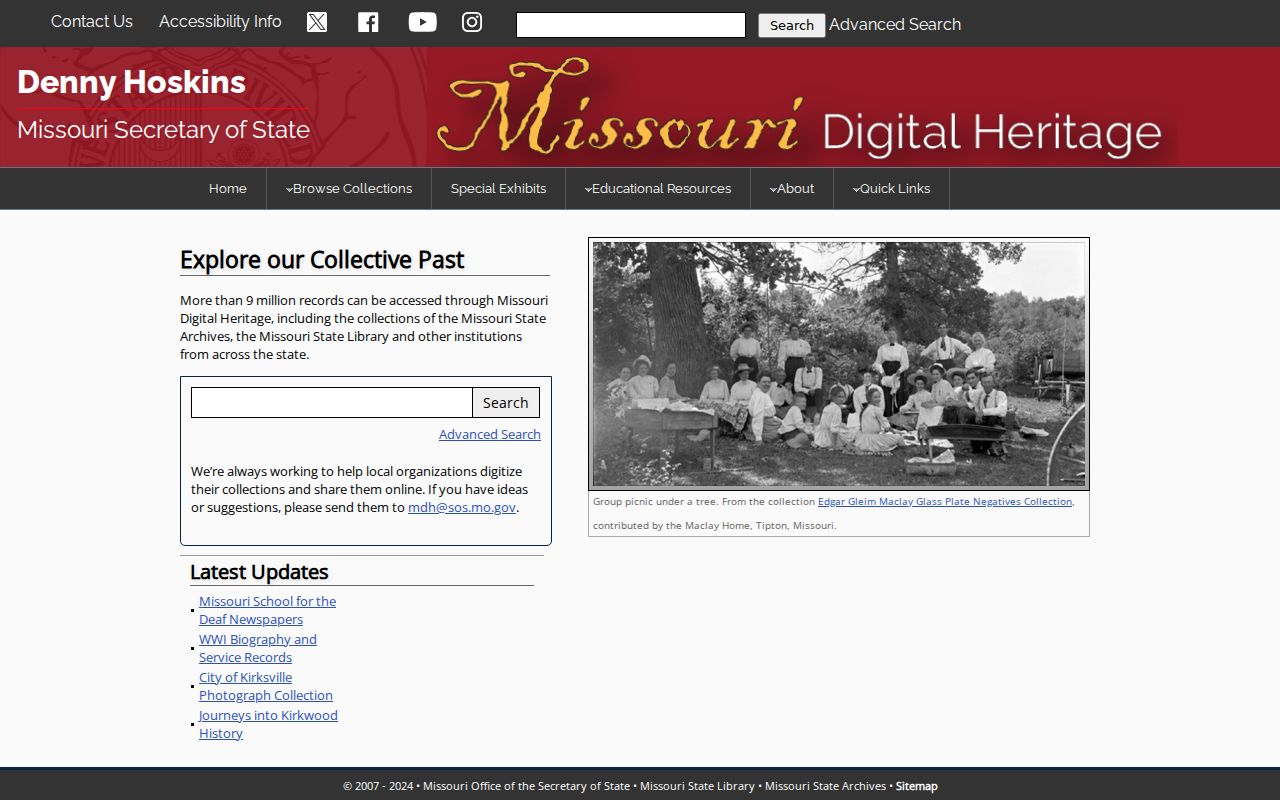
Digitized collections can make names, addresses, occupations, dates, and businesses searchable, but an image or text hit still needs its publication date, page or image reference, and source description recorded alongside it.
Note: The verified Polk years and local telephone-directory span should not be read as a continuous publication run.
Reading Liberty City Directory Entries
A usable historical entry has more than a name. Preserve the wording exactly as printed, the publication year, page or image, street or address, household or business label, and the repository that supplied it. The survey reports 1929 directory entries for W.W. Cosby and Jack Massey at 211 N Gallatin, then later George R. and Alice I. Crockett entries. Each is a dated historical lead. None establishes present occupancy, a relationship, or an unlisted household member.
| Name as printed | Use initials, punctuation, and spelling from the volume. |
|---|---|
| Street or address | Record it as shown, including an older format or number. |
| Household or business label | Distinguish a subscriber, household, or business listing. |
| Publication detail | Keep the year plus page or image number. |
| Repository | Identify the catalog, archive, microfilm, or digital collection. |
- Criss-cross directory
- An address-ordered directory that may point from a street location to a listed household or business for that year.
- Householder index
- A name arrangement centered on the listed household, not proof of every person at the address.
- Abbreviation key
- The volume’s explanation of its own shortened labels. Photograph or note it before interpreting a mark.
Initials, aliases, spelling variants, street names, and business names are useful search terms. Compare like with like. A later address format may not mean an earlier directory made an error.
Liberty City Directory Shelves
Clay County Archives & Historical Library, at 210 E Franklin in Liberty, is the local specialist for original Clay County material, city records, school material and photographs, newspapers, genealogy resources, cemetery and obituary projects, and correspondence research. Its stated general hours are Monday through Wednesday, 9 a.m. to 4 p.m., with weather, holiday, and Christmas-week closures. On-site use is free for members and $5 per day for nonmembers. Confirm hours, access, and copy terms before a visit.
The archive’s correspondence preliminary research is listed at $10 per surname plus $10 per hour. A narrow request works best: give a surname or address, a date range, the collection sought, and whether a scan or transcription is needed. Missouri State Archives is the broader state repository, while FamilySearch is an access map for cataloged material. A catalog entry is not a guarantee that images can be viewed from every location.
Visit the Clay County Archives repository for its local collections and service information.
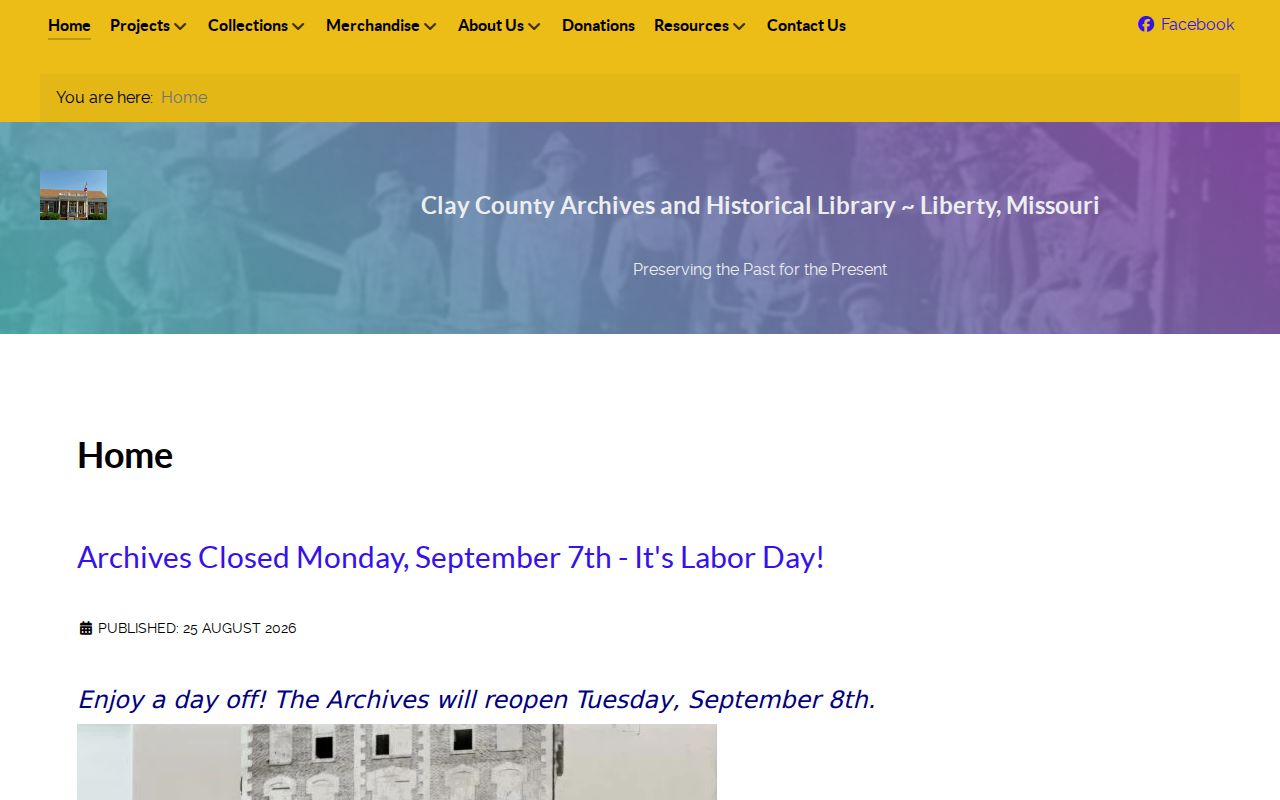
The archive’s newspaper, city-record, photograph, and genealogy holdings make it a useful place to verify a directory clue against a nearby source rather than treating one printed entry as final.
Liberty Tribune Directory Context
The Liberty Tribune supplies older people-and-place context that a printed directory may not cover. Missouri Digital Heritage lists date blocks for 1846-48, 1852-67, 1869-78, 1880, 1882, and 1883. The State Historical Society of Missouri selected index covers April 4, 1846 through January 29, 1869 and recommends variant-name searching. Search a surname, initials, street, business, church, or school name, then inspect the issue rather than relying on an index label alone.
A newspaper notice can corroborate an address, business, death notice, or community event. It is still reporting or advertising, not a legal identity record. Pair it with a directory, deed, permit, probate file, census or tax source when the question requires a stronger match. Clay County Archives is expanding electronic newspaper access in 2026, but “electronic” can mean a searchable scan rather than a complete run or unrestricted download.
Start with the Missouri Digital Heritage city-directory resource when checking how historical directory searches work.
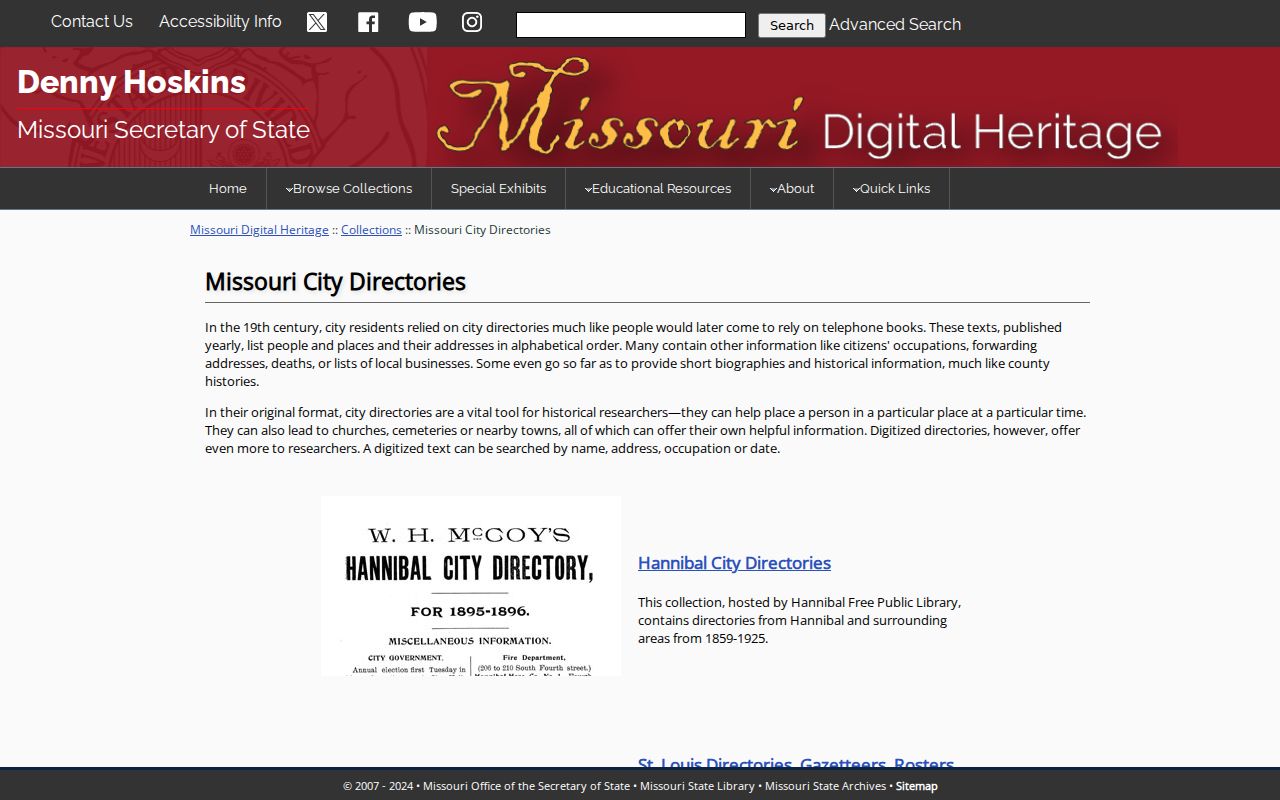
A careful search records the issue date, page, spelling used, and whether the result is an index lead, a scan, or full text. That context makes later verification possible.
A Liberty Directory Address Trail
[STORY] The 211 N Gallatin survey entry shows why a Liberty directory search should be chronological. Water permits record service turned on in 1912. A 1914 atlas shows an unnamed lot. The 1929 directories place W.W. Cosby and Jack Massey at that address, and the survey describes later George R. and Alice I. Crockett directory entries from roughly 1945 through 1994. This is a documented sequence of historical sources, not a statement about a current resident or owner.
The useful next step is to preserve each source’s own wording. An address can be renumbered, reused, or recorded by lot and block. Where a directory, map, or permit differs, write down the discrepancy and find the original page. The Liberty survey is especially useful because it identifies the supporting water permits, atlas, and directory material rather than asking a reader to infer an unbroken story.
Trace a Liberty City Directory
For family or house history, move through the directory years one record at a time. The method keeps changes visible and gives a clear way to distinguish a move from a missing volume or an unresolved name match.
- Locate the first available surname, address, or business entry and record the exact volume year.
- Check the next verified directory year, using initials and spelling variants as well as the full name.
- Compare the street, label, and nearby entries without assuming that adjacent listings show a relationship.
- Pair a directory interval with a newspaper, map, permit, deed reference, cemetery source, probate record, or census and tax source that fits the date.
- Mark missing years and uncertain identity matches as unresolved rather than guessing across them.
A disappearance can reflect a move, death, a changed listing practice, a gap in the collection, or a name variation. A cemetery map or obituary project may help with a deceased-person trail, but neither proves last residence. For an address-focused record sequence, the Liberty past residents page follows the related parcel and deed route.
Liberty City Directory Limits
Liberty city directories are dated publications with selective coverage. A listed name may be a subscriber, householder, business, or historical contact, depending on the volume. An omitted person may have moved, been unlisted, used a different name, or fallen in a collection gap. A directory entry does not settle a same-name question, prove a current address, or establish a family relationship.
Use a simple provenance note for every historical name: source title, repository, record type, publication year, exact spelling, page or image, location, retrieval date, and identity confidence. Do not add full birth dates, sensitive contact data, or a protected address. When the underlying source does not resolve a conflict, leave a [RESEARCH GAP] rather than turning a likely match into a claim.
Historical use. Treat a Liberty directory entry as a dated source for family and place history, and never use it to contact, watch, or harass a person.
Requesting Liberty Directory Material
Ask a repository for a precise item, not a broad person file. A useful request names the collection, surname or address as printed, date range, and whether a scan, page reference, or transcription is needed. Clay County Archives publishes services and fees, while the Missouri State Archives offers research-room appointments and limited request routes. For a city-held historical record that is not online, Missouri’s Sunshine Law directs the requester to the custodian of the agency that retains the record.
RSMo §610.023 requires a Missouri custodian to respond by the end of the third business day with access, a delay explanation, or a denial that states the legal basis. It does not make every old item instantly searchable or override copyright, repository rules, sealed material, or a collection’s access limit. Keep the request, reply, date range, and record description together if follow-up is needed.
Note: For a historical correction, identify whether the issue is transcription, identity, date, or address, and preserve the source wording when reporting it.
Liberty Historical Collections Watch
Historical access changes. Clay County Archives’ 2026 electronic-newspaper expansion and its 2025 Liberty history update point to more searchable material, while the city’s 2021 Historic Preservation Plan describes an Imaging History effort. Check the archive, Missouri Digital Heritage, Missouri State Archives, and city preservation resources before citing a new online collection. A changed portal label, new scan, or revised access rule should be dated before it becomes part of a Liberty city directory trail.
No single Liberty records-initiative dashboard was identified in the research. Check the repository or custodian directly when a collection, fee, form, or access statement affects a request.